



In-depth analysis of core considerations in the entire medical injection molding process
Medical injection molding is far from the production of ordinary plastic products. It is an ultimate fusion of precision manufacturing, material science, sterile control, and regulatory compliance. Its products come into direct or indirect contact with the human body, and are related to life health and treatment effectiveness. Therefore, every link must adhere to stringent standards that exceed the norm. The following will systematically and deeply analyze the key issues that must be paid attention to in medical injection molding from six core dimensions.
Biocompatibility and Regulatory Compliance:
Core requirements: It is imperative to use dedicated grades of materials that have been certified according to medical device regulations, such as those compliant with USP Class VI (United States Pharmacopeia Class VI) and ISO 10993 series of biocompatibility testing standards. Common medical-grade resins include polypropylene (PP), polycarbonate (PC), ABS, polyethylene (PE), polyetheretherketone (PEEK), and so on.
In-depth consideration: Biocompatibility is not a single attribute. It requires targeted evaluation based on the part of the product that comes into contact with the human body (surface contact, internal contact, implantation) and the duration of contact (short-term, long-term, permanent). For example, long-term implants have extremely stringent requirements for material resistance to hydrolysis, ion leaching, and immune response.
Traceability: A traceability system must be established for the entire process from granules to finished products. Suppliers are required to provide complete Certificate of Conformity (CoC) for materials, and ensure that each batch of raw materials is uniquely identified, so that the source can be accurately traced in case of any issues.
Purity and pollution control:
Low impurity and low leachable substance content: Medical materials are subject to strict restrictions on heavy metals, monomer residues, catalyst residues, etc. During the production process, the materials undergo special purification treatment to ensure extremely low levels of impurities and leachable substances.
Additive Control: All additives, including colorants, plasticizers, and stabilizers, must also comply with medical regulations to ensure they are non-toxic, non-allergenic, and stable under sterilization conditions. Halogen-free and phthalate-free have become basic requirements.
Supply Chain Management: Opt for collaboration with globally renowned chemical giants (such as SABIC, Covestro, DuPont, etc.) or their authorized distributors to ensure a stable and reliable supply chain, and avoid using materials of unknown origin or recycled materials (unless they are strictly certified medical closed-loop recycled materials).
II. Mold Design and Manufacturing: The Soul of Precision and Stability
Molds are the "mother of industry," and in medical injection molding, their importance is elevated to the strategic level, determining the success or failure of the product.
Ultra-high precision and ultimate detail:
Precision level: Medical molds typically require accuracy that meets or even exceeds ISO IT6-IT7 standards. The processing of cavities and cores necessitates the use of processes such as slow-moving wire cutting, precision grinding, and high-speed milling, with key part tolerances often controlled within ±0.005mm.
Surface treatment: Mold steel materials (such as Swedish Yishengbai S136, German Gretz 1.2316, and other corrosion-resistant mirror steel) require fine polishing to achieve a mirror-like finish (such as the VDI 3400 standard). This is not only for aesthetic purposes but also to reduce the resistance of microstructures to plastic flow, avoid weld lines in critical areas, ensure smooth demolding, and prevent damage to the product due to mold sticking. Advanced surface treatments (such as PVD coating, chromium nitride coating) can also enhance wear resistance, corrosion resistance, and demolding performance.
Exhaust and cooling system design: Precise exhaust grooves can effectively expel air and volatile gases from the mold cavity, preventing defects such as charring and short shots. A well-designed cooling water channel ensures uniform and efficient control of mold temperature, significantly reducing molding cycle time, decreasing internal stress in the product, and enhancing dimensional stability.
Anti-pollution and easy-to-clean design:
Structural simplification: On the premise of meeting functional requirements, simplify the mold structure as much as possible, reduce the number of sliders and inserts, thereby reducing the risk of harboring dirt and contaminants.
Seamless design: All internal corners should be designed as rounded corners, and locations such as flow channels and ejector holes should be easy to clean and disinfect, to avoid becoming a breeding ground for microorganisms.
Material selection: All mold components that come into contact with the product must be made of corrosion-resistant materials to prevent rust from contaminating the product.
Life cycle maintenance and management:
Preventive Maintenance (PM): Establish a rigorous mold maintenance plan, encompassing regular cleaning, rust removal, lubrication, wear inspection, and repair. Professional maintenance is required after each production run.
Status monitoring: Utilize mold monitors to conduct real-time monitoring of parameters such as clamping force, ejection frequency, and temperature, provide early warnings for abnormalities, and prevent batch-wide quality accidents.
III. Process control: Leaping from experience to science
A stable process is the guarantee for producing consistent high-quality products. Medical injection molding must undergo a scientific transformation from being "experience-driven" to being "data-driven".
Scientific setting and optimization of parameters:
Based on the setting of material properties: Drying temperature and time, melt temperature, and mold temperature must strictly adhere to the recommended ranges specified in the Technical Data Sheet (TDS). For instance, high-temperature materials like PEEK necessitate a barrel temperature of up to 300-400°C and a dedicated high-temperature mold temperature controller.
Robust Process Window: Through the Design of Experiments (DOE) method, systematically study and determine the robust range of key process parameters (such as injection speed, packing pressure/time, cooling time). When producing within this range, even with minor fluctuations in parameters, the product can still be qualified.
Closed-loop control: An electric injection molding machine equipped with a precision servo valve and pressure sensor is used to achieve real stability control of high injection speed and pressure, ensuring high repeatability of the injection curve for each mold.
Comprehensive monitoring and tracing of the process:
Machine parameter monitoring (SPC): Conduct statistical process control on key process parameters, draw control charts in real time, and immediately trigger an alarm and shut down the machine for inspection in case of any abnormal trend.
Quality parameter monitoring: Integrate visual inspection systems, laser measuring instruments, etc., to conduct 100% online inspection of key dimensions and weight of each batch of products, achieving real-time collection and analysis of quality data.
Data integrity: All process parameters, monitoring data, and production batch information must be automatically recorded and securely stored, meeting the regulatory requirements of FDA 21 CFR Part 11 regarding electronic records and electronic signatures, to ensure that the data is tamper-proof and traceable for a long period of time.
IV. Quality inspection: A verification system covering the entire lifecycle
Quality is not only tested, but also designed and produced. Quality control of medical injection molding is a three-dimensional system that runs through the entire product lifecycle.
Multi-level inspection strategy:
In-process Quality Control (IPQC): As mentioned above, 100% inspection of key characteristics is conducted during the production process.
Outgoing Quality Control (OQC)/Final Quality Control (FQC): Conduct final inspections on appearance, dimensions, functionality, and packaging based on the approved product release standards (AQL sampling plan or 100% full inspection).
Performance and Biocompatibility Testing: Samples are taken periodically or by batch and sent to qualified laboratories for mechanical property testing (tensile, impact), chemical testing (extractable/leachable substance analysis), and biocompatibility testing (such as cytotoxicity, sensitization, and irritation).
Strict cleanliness and sterility control:
Product cleanliness: There are strict requirements for particulate contamination (insoluble particles) and microbial limits (bacterial endotoxins). Post-processing (such as debinding and assembly) and packaging must be carried out in a clean environment.
Sterility assurance: For sterile medical devices, it is necessary to verify the compatibility of the selected sterilization method (such as ethylene oxide (EO) sterilization, gamma-ray irradiation, steam sterilization) with the materials and products. Strict sterilization process validation and routine control should be implemented to ensure a sterility assurance level (SAL)
V. Production Environment: Upgrading from "Workshop" to "Controlled Environment"
The production environment serves as the "backdrop" for product quality, necessitating a shift from an industrial workshop mindset to a controlled environment mindset.
Cleanroom environment:
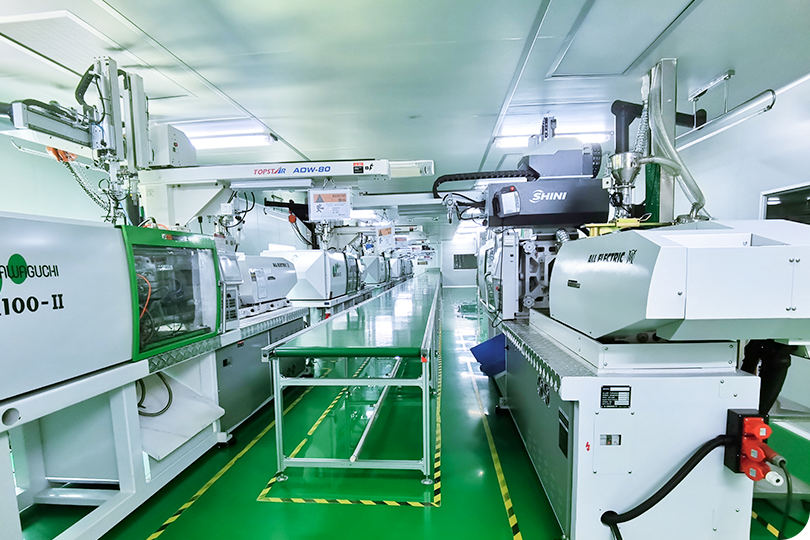
Grade requirements: Depending on the product risk level, production, post-processing, and packaging are typically carried out in cleanrooms classified as Grade 7 (10,000 grade) or Grade 8 (100,000 grade) as defined by the ISO 14644-1 standard. For implants or products that come into contact with blood, the requirements may be even higher.
Dynamic control: Not only must static particle counts meet standards, but it is also essential to control the dynamic pollution brought in and generated by personnel, materials, and equipment. Cross-contamination should be prevented through reasonable pressure gradient design (such as gradually reducing the pressure difference from high-cleanliness areas to low-cleanliness areas).
Comprehensive control of environmental parameters:
Constant temperature and humidity: Strict temperature and humidity control (such as 22±2°C, 50±10%RH) is not only necessary for personnel comfort, but also to prevent raw materials from absorbing moisture (which affects drying and product performance), ensure the stability of injection molding processes, and meet the requirements of certain special processes (such as liquid silicone rubber LSR molding).
Personnel and Material Management: Personnel must undergo a change of clothes and air shower procedures, and wear specialized cleanroom clothing. All materials, tools, and packaging entering the cleanroom must undergo cleaning or disinfection processes.
VI. Compliance with Regulations and Quality Management System: The "Lifeline" Running Through the Entire Process
Regulations are not constraints, but rather frameworks that ensure safety and effectiveness. Compliance is the access permit and bottom line for the survival of medical injection molding enterprises.
Quality Management System (QMS) certification:
ISO 13485: This is the gold standard in the medical device industry and serves as the cornerstone for establishing a comprehensive quality management system. It emphasizes risk management, process approach, verification and validation, traceability, and regulatory reporting.
Regional market access: If the target market is in the United States, it is necessary to comply with the FDA's QSR 820 regulations; if the target market is in the European Union, it must meet the requirements of the Medical Device Regulation (MDR) and may be subject to review by a notified body.
Whole-process risk management:
Application of ISO 14971: Risk management must be integrated throughout the entire lifecycle, from design and development (molds and products), raw material procurement, production and manufacturing, inspection and testing, to after-sales service. Hazards must be systematically identified, risks assessed, control measures implemented, and the effectiveness of these control measures monitored.
Design control and process verification:
Design History File (DHF): A comprehensive record of the entire process, spanning from user requirements to product specifications, design verification, and validation.
Equipment and Process Validation: Conduct Installation Qualification (IQ), Operational Qualification (OQ), and Performance Qualification (PQ) for all key production equipment (injection molding machines, molds, dryers, temperature controllers) and special processes (such as welding, bonding, sterilization), providing objective evidence to demonstrate their ability to consistently and stably produce products that meet predetermined requirements.
In summary, medical injection molding is a systematic project. It requires enterprises to be guided by risk management thinking, produce high-quality products that are traceable and verifiable through precise and stable molds and scientifically optimized processes, using safe and reliable raw materials in a controlled and clean environment under a compliant system framework. Each "precautions" mentioned here is not an isolated checklist, but a core pillar that interlocks and jointly builds a solid defense line for medical safety.





 +86 13724506670