



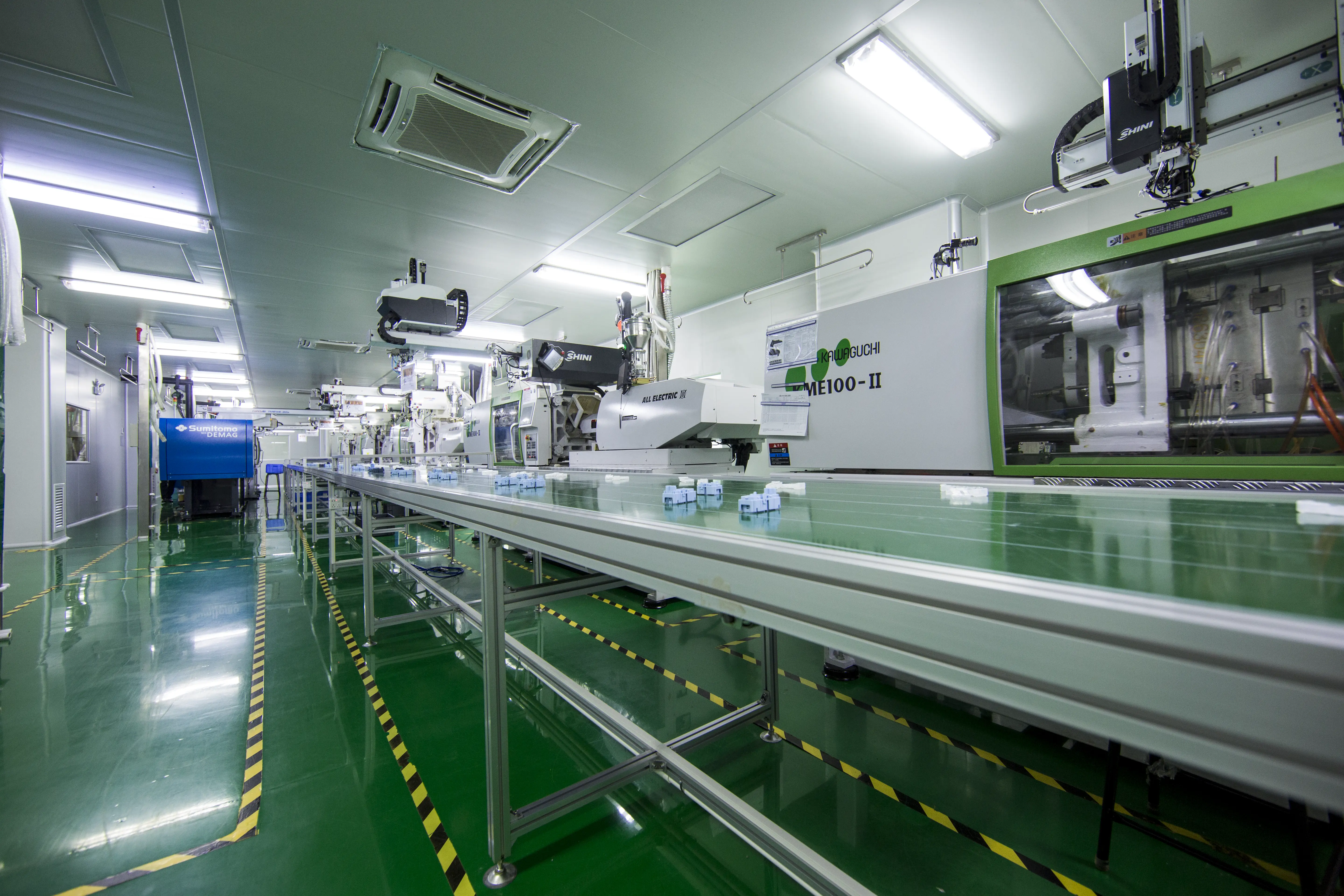
In the field of medical manufacturing, injection molding technology stands out as one of the core techniques for medical device production due to its high efficiency, precision, and scalability for mass production. The choice of materials directly determines the safety, functionality, and compliance of the products. As a company with 20 years of experience in the injection molding industry, our company will systematically organize and deepen the understanding of the characteristics, selection logic, processing essentials, and industry trends of medical injection molding materials based on practical experience. Our aim is to provide a guide that combines theoretical knowledge with practical reference for industry colleagues.
1. Core selection logic for medical injection molding materials: beyond performance checklist
Choosing medical materials is far from as simple as comparing physical properties. It is a systematic project that involves finding the optimal balance between biocompatibility, functionality, processability, and economy.
Biocompatibility is the bottom line and premise
Definition and Classification: Materials must undergo a series of rigorous biocompatibility tests, such as ISO 10993 or USP Class VI, to ensure they are non-toxic, non-allergenic, and non-carcinogenic when in contact with human tissue and blood. Different contact methods (surface contact, implantation in the body, blood contact) and contact durations (short-term, long-term, permanent) correspond to varying levels of material requirements.
Key points of engineering practice: Certification is merely the starting point. During the processing, any additives (such as colorants, plasticizers, stabilizers), mold release agent residues, and even degradation products generated by materials due to overheating or prolonged residence in the barrel may introduce biological safety risks. Therefore, it is imperative to use medical-grade pure resin and establish a strict clean workshop environment and process control system.
Functional requirements drive the refinement of materials
Mechanical properties: For example, artificial joints require extremely high wear resistance (UHMWPE); surgical tool handles require good impact resistance and hand feel (ABS, PC).
Chemical stability: It must withstand repeated chemical disinfection (such as ethylene oxide, peracetic acid) or radiation sterilization (γ-rays, electron beams) without experiencing embrittlement, yellowing, or significant performance degradation. For example, polypropylene (PP) is relatively sensitive to radiation, while polycarbonate (PC) may turn yellow under γ-irradiation, necessitating the selection of stabilized grades.
Transparency and cleanliness: Infusion sets, blood bags, observation windows, etc. require materials with high transparency and low haze (such as PC, PP transparent materials), and should not easily produce precipitates that contaminate the drug solution.
Special properties: For example, PTFE's extremely low friction coefficient and excellent chemical inertness make it an ideal coating for catheter wires; TPU's excellent elasticity and fatigue resistance are widely used in peripheral vascular catheters and drainage tubes.
Process feasibility and cost-effectiveness
The flow characteristics (MFI), crystallinity, shrinkage rate, and thermal stability of materials directly affect mold design (gate, runner, cooling), process window setting, and product dimensional stability. Although high-cost specialty engineering plastics (such as PEEK) exhibit excellent performance, their high raw material prices and demanding processing temperatures (melting temperature exceeding 340°C) limit their use to high-value-added implants such as orthopedic and dental implants.
II. In-depth Analysis of Core Materials and Guidelines for Engineering Applications
The following provides an engineering interpretation of commonly used materials beyond their basic characteristics:
1. Polyethylene (PE)
Engineering deepening:
HDPE: High crystallinity brings high rigidity and impermeability, making it commonly used in bottles and cans that require a certain degree of structural strength. However, its environmental stress cracking resistance (ESCR) is a key indicator, and special grades need to be selected when it comes into contact with certain lipid ointments.
LDPE/LLDPE: With excellent flexibility and sealing performance, it is the main material for most flexible packaging bags and infusion bags. Multi-layer co-extruded infusion bags often use LLDPE as the heat-seal layer.
UHMWPE: Its ultra-high molecular weight endows it with unparalleled wear resistance and impact resistance, making it the gold standard material for artificial acetabular and knee joint implants. However, its processing is extremely difficult, and it is usually processed by compression molding and sintering rather than conventional injection molding.
Processing notes: PE has a wide processing temperature range, but it has a relatively high shrinkage rate (especially HDPE), so the mold needs to accurately calculate the shrinkage rate. It has good fluidity and is suitable for making thin-walled products.
2. Polypropylene (PP)
Engineering refinement:
Homo-PP: High rigidity and good heat resistance (able to withstand high-temperature sterilization at 121℃), making it the core material for syringe barrels and pistons. Its "hinge characteristic" is cleverly utilized in bottle caps that do not require external hinges.
Co-PP (Co-polymerized Polypropylene): The introduction of ethylene units has significantly improved its low-temperature impact resistance, making it suitable for surgical trays and containers that require drop resistance.
Random Co-PP: Its transparency has been significantly improved, making it competitive with PS and PC in the transparent component market, such as transparent petri dishes and infusion set components.
Processing notes: PP has a fast crystallization rate, making the design of the cooling system crucial to avoid sink marks. It is sensitive to ultraviolet light, and stabilizers need to be added if it is intended for long-term outdoor use or radiation sterilization.
3. Polyvinyl chloride (PVC)
Engineering refinement:
The dominance of flexible PVC is attributed to its excellent cost-effectiveness, transparency, and processability. However, the safety controversy surrounding the migration risk of the plasticizer DEHP is driving industry transformation.
Industry Trend: The development of medical PVC using safer alternative plasticizers (such as TOTM, ATBC), or the shift towards non-PVC materials such as TPU, TPE, and POE, has become a clear direction. Especially in the fields of neonatal medication and long-term infusion, non-PVC tubing is a standard configuration in the high-end market.
Rigid PVC (unplasticized) still finds applications in medical equipment casings and ventilation ducts due to its rigidity, flame retardancy, and cost advantage.
Processing precautions: PVC has poor heat stability and a narrow processing temperature window, necessitating precise temperature control to prevent decomposition and the generation of hydrogen chloride. Molds and runners should avoid dead spaces to prevent material retention and decomposition.
4. Acrylonitrile-butadiene-styrene copolymer (ABS)
Engineering deepening:
In the medical field, ABS's competitiveness lies in its excellent surface hardness and glossiness, as well as its ease of electroplating or painting. It is commonly used for equipment casings, buttons, and handles that require a metallic texture and high appearance standards, such as ultrasonic equipment casings and dialysis machine panels.
Its disadvantage is that its chemical resistance (especially to ketone and ester solvents) and weather resistance are generally moderate, making it unsuitable for scenarios involving frequent exposure to strong disinfectants or long-term exposure to ultraviolet light.
Processing note: ABS has strong moisture absorption, and it must be fully dried before injection molding (recommended at 80-85℃ for 2-4 hours), otherwise silver streaks or bubbles will appear on the surface of the product. Mold temperature affects surface glossiness.
5. Polycarbonate (PC)
Engineering refinement:
The "transparent armor" characteristic of PC is irreplaceable. Its ultra-high impact strength (250 times that of glass) and ability to withstand high-pressure steam sterilization (134°C) make it the preferred choice for surgical instrument handles, endoscope components, and high-pressure syringe barrels.
Medical-grade PC typically undergoes hydrolysis stabilization treatment to address the challenges of hydrolysis aging caused by repeated high-pressure steam sterilization.
Blending with ABS (PC/ABS alloy) can improve processing fluidity, reduce internal stress, and lower costs while maintaining good heat resistance and impact resistance. It is widely used in monitor casings, respiratory masks, and other products.
Processing precautions: PC is extremely sensitive to moisture and must undergo deep dehumidification and drying (120°C, 3-4 hours). The molding temperature is high, and the barrel needs to be cleaned to avoid mixing with other low-temperature decomposable materials. Internal stress control is key, and it is necessary to prevent stress cracking through reasonable mold design and mild process conditions (higher mold temperature, appropriate packing pressure).
6. Special and high-performance engineering plastics
Polytetrafluoroethylene (PTFE), known as the "plastic king," adheres to almost no substances and exhibits excellent biocompatibility. Besides being used as a coating, its expanded form (ePTFE) is a revolutionary material for manufacturing artificial blood vessels and heart patches. Pure PTFE cannot be injection molded conventionally and requires plunger extrusion or molding sintering.
Polyurethane (PU & TPU): TPU combines the elasticity of rubber with the strength of plastic, offering resistance to flexing and wear. It is widely used in medical applications such as central venous catheters, interventional balloons, and wound dressing films. Its hardness range spans from Shore A 60 to D 80, allowing precise control through molecular design.
Polymethylmethacrylate (PMMA): It boasts excellent optical transparency and weather resistance, and has a long history of being implanted in the human body (such as intraocular lenses and bone cement). Its surface can be modified to enhance its biological activity.
Polyetheretherketone (PEEK): a peak-level high-performance plastic, with an elastic modulus close to that of bone, capable of transmitting X-rays, and resistant to repeated high-pressure steam sterilization. It is an ideal material for spinal fusion devices, trauma fixation plates, and orthopedic surgical guides. However, it is extremely difficult and costly to process.
Cycloolefin copolymers (COC/COP): a new generation of high-end medical materials, featuring ultra-high transparency, extremely low water vapor transmission rate, excellent biocompatibility, and inertness. Primarily used in high-end prefilled syringes, microfluidic chips, and diagnostic reagent bottles, they are gradually replacing some glass and traditional plastics.
III. Essentials of Injection Molding Process: From Materials to Safe Products
Cleanroom Molding: For Class II and Class III medical devices, injection molding typically needs to be conducted in a cleanroom with a cleanliness level ranging from 10,000 to 100,000, to control dust and microbial contamination.
Drying and Dehumidification: As mentioned earlier, most engineering plastics (PC, PA, PET, etc.) must be strictly dried. A dehumidifying dryer should be used, and the dew point should be monitored (it is recommended to be <-30℃).
Process parameter optimization: Given the high precision requirements for medical products, refined process control is necessary. For instance, a melt pump is used to stabilize output pressure, an in-mold sensor is employed to monitor cavity pressure and temperature in real time, and valve gates are utilized to control weld lines and achieve balanced filling.
Automation and Traceability: From material input to finished product retrieval, the entire process is automated to minimize human contamination. Additionally, a comprehensive product traceability system has been established, recording information such as material batch numbers, process parameters, and production time for each product, meeting the quality system requirements of FDA 21 CFR Part 820 and ISO 13485.
IV. Outlook on Future Trends
Material innovation: bioresorbable materials (such as PLA, PGA) for temporary implants; antibacterial modified materials (loaded with silver ions, quaternary ammonium salts) to reduce nosocomial infections; smarter polymers (such as shape memory polymers).
Micro-molding: With the development of interventional devices and minimally invasive surgery, the demand for micron-level precision components has surged, giving rise to ultra-precise micro-molding technology.
Digitalization and intelligence: Utilize CAE simulation to optimize flow and cooling, and combine IoT technology to achieve real-time monitoring and predictive maintenance of the injection molding process, thereby enhancing production efficiency and product consistency.
In summary, the world of materials for medical injection molded products is a complex field that integrates material science, precision manufacturing, and life science regulations. Successful products stem from a profound understanding of the essence of materials, an extreme pursuit of craftsmanship, and an unwavering reverence for life safety. As engineers, our mission lies in mastering this vast array of materials and technologies, transforming safe innovations into reliable products that nurture health.





 +86 13724506670